AI Governance Framework for SMBs: A Practical Implementation Guide
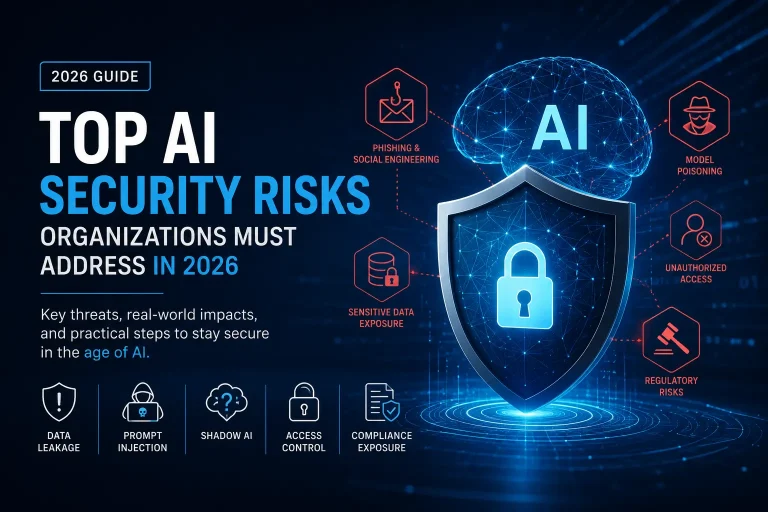
IMAGE: AI governance and security framework concept — global connectivity and digital intelligence
Artificial intelligence is no longer limited to large enterprises. Today, even small and medium-sized businesses (SMBs) are using AI tools for automation, customer engagement, analytics, and decision-making.
However, while adoption has become easier, managing AI responsibly has become more complex.
Many organizations start using AI without clearly understanding what data is being used, how decisions are made, or what risks are introduced.
This is where an AI governance framework becomes essential. Without proper governance, AI systems can introduce risks that are not immediately visible but can have long-term consequences — from compliance issues to reputational damage.
What is an AI Governance Framework?
An AI governance framework is a structured approach to managing how AI systems are designed, deployed, monitored, and controlled within an organization.
It ensures that AI systems are aligned with business objectives, used responsibly, compliant with regulations, and continuously monitored for risks.
How AI should be used, who is responsible, and how risks are controlled.
Why SMBs Need AI Governance Now
Many SMBs assume governance is only necessary for large enterprises. In reality, smaller organizations often face greater risk exposure due to limited controls.
Rapid AI adoption without controls
Tools like chatbots, automation platforms, and AI analytics are often implemented quickly without structured oversight.
Data sensitivity risks
Even SMBs handle customer data, financial information, and internal business insights. Uncontrolled AI usage can expose this data.
Regulatory pressure is increasing
Frameworks like the EU AI Act are setting expectations for how AI should be governed globally.
Reputation risk
One incorrect AI-driven decision or data leak can impact trust significantly.
Core Components of an AI Governance Framework
- Policies and standards — define how AI tools can be used within the organization.
- Risk management — identify and assess risks associated with AI usage.
- Compliance controls — ensure alignment with regulatory requirements and data protection laws.
- AI security controls — protect models, data, and systems from threats.
- Monitoring and accountability — track AI behavior and assign ownership.
Step-by-Step Implementation for SMBs
A practical governance framework does not need to be complex. It should be structured but adaptable.
Step 1: Identify AI usage across the organization
Start by mapping the tools being used (ChatGPT, automation tools, analytics platforms), the business functions using AI, and the type of data being processed.
Step 2: Classify risk levels
Not all AI usage carries the same risk. Low risk covers content generation; medium risk covers internal analytics; high risk covers decision-making systems.
Step 3: Define clear policies
Create simple but clear policies: what data can be shared with AI tools, who can use AI systems, and the approval process for new tools.
Step 4: Implement security controls
Ensure access control for AI tools, data protection measures, and monitoring of external AI usage.
Step 5: Establish monitoring mechanisms
Track how AI is being used, anomalies in outputs, and potential misuse.
Step 6: Assign ownership
Every AI system should have a responsible owner and defined accountability.
AI Risk Matrix for SMBs
A simple risk matrix helps organizations prioritize governance efforts.
| Risk type | Description | Example |
|---|---|---|
| Data risk | Poor or sensitive data usage | Sharing confidential data with AI tools |
| Security risk | Threats to AI systems | Prompt injection or unauthorized access |
| Compliance risk | Regulatory violations | Not meeting data protection laws |
| Ethical risk | Biased or unfair outcomes | Discriminatory AI outputs |
| Operational risk | Business disruption | AI system failure affecting processes |
Worth noting
This matrix should evolve as AI usage expands. Treat it as a living document reviewed each quarter, not a one-time exercise.
Common Mistakes Organizations Make
- No clear policies — employees use AI tools without guidance.
- Over-reliance on tools — assuming AI outputs are always accurate.
- Ignoring security risks — not considering prompt injection or data leakage.
- Lack of monitoring — no visibility into how AI is used.
How AI Governance and AI Security Work Together
AI governance and AI security are often treated separately, but they are deeply interconnected. Governance defines rules and accountability; security ensures those rules are technically enforced.
Without governance, security lacks direction. Without security, governance lacks enforcement. Together, they form a complete AI risk management strategy.
Final Thoughts
AI adoption is accelerating, but responsible usage is still catching up.
For SMBs, implementing a governance framework early provides better control, reduced risk, and stronger compliance readiness. More importantly, it builds trust — both internally and externally.
Organizations that treat AI governance as a strategic priority today will be better prepared for the challenges and opportunities of tomorrow.
If you would like a structured review of how AI is currently being used in your business, get in touch.